
"indigenous coffee"
1100 article(s) found

Aromatic Ecuadorian fine coffee beans Flavor Taste Manor Features
In 1875, 340 years after Frei Thomas de Berlanga discovered the island, an indigenous man named Cobos arrived on San Cristobal Island, where he established the Hassenda Coffee Plantation and planted about 100 hectares of Arabic bourbon trees. Because the plantation is located between 140 meters and 275 meters above sea level, the climate is equivalent to the climate between 915 meters and 1830 meters inland.

Guatemala coffee taste Guatemala coffee shape
Professional coffee knowledge exchange more coffee bean information Please pay attention to the coffee workshop (Wechat official account cafe_style) is very rich in natural resources, making Guaguo coffee amorous feelings, the common tonality is elegant and lively, clean taste, layered, with green malic acid, jasmine, orange peel, green pepper, cocoa flavor, some finish will have a strong smoke flavor. Pluralistic and rich

Uganda Bugisu Coffee producing area introduces the characteristics of Ugandan Coffee Brand Uganda Coffee
Professional coffee knowledge exchange more coffee bean information please follow Coffee Workshop (Wechat official account cafe_style) our Ugandan Bugisu AA is 100% Arabica coffee, although it has grown Arabica coffee for more than 100 years, Uganda is more often associated with Robusta, which is the indigenous people of the region. In fact, because of its huge Robusta,

Burundian Coffee Flavor description characteristics of Grinding degree introduction of High-quality Coffee beans in producing areas
There are two major ethnic groups in Burundi, and only about 15 percent of the Tutsi have ruled the country since the 16th century, controlling the civilian population, which is mainly made up of Hutu, plus a very small number of indigenous Twa. This abnormal social structure in which ethnic minorities occupy a high position has buried the evil seed of national instability, and in 1

Why is Papua New Guinea coffee descended from the Blue Mountains? Introduction of PNG Coffee Bean treatment
For more information on coffee beans, please follow Coffee Workshop (Wechat official account cafe_style) Coffee Sigri Manor Papua New Guinea is one of the least developed countries in the world, with dense rainforests, rugged mountains and a diverse indigenous population. In addition, the country's biodiversity is also amazing, with about 6. 5 percent

Introduction to the species of Panamanian Flower Butterfly, Panamanian Coffee Poket Butterfly
Exchange of professional baristas Please follow the Coffee Workshop (Wechat official account cafe_style) since early on, the Panamanian coffee industry relies on the skilled hands of the Ngbe-Bugl Ngabe-Burger Panamanian Indians who have been migrating from their homeland, Mount comarca, to work on the Baru Volcano Coffee Farm. Ngbe-Bugl Ngabe and Burger are actually
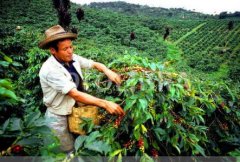
Balanced and refreshing Ecuadorian coffee beans Flavor Taste Manor Features
In 1875, 340 years after Frei Thomas de Berlanga discovered the island, an indigenous man named Cobos arrived on San Cristobal Island, where he established the Hassenda Coffee Plantation and planted about 100 hectares of Arabic bourbon trees. Because the plantation is located between 140 meters and 275 meters above sea level, the climate is equivalent to the climate between 915 meters and 1830 meters inland.

Mexican coffee industry development history "magic country" tenacious southern coffee
Professional barista communication, please pay attention to coffee workshop (Weixin Official Accounts cafe_style) north latitude and climate can not grow coffee, coffee planting areas are in the south. Ninety percent of Mexico's coffee comes from four southern provinces: Chiapas (35 percent), Oaxaca (13 percent), Puebla (15 percent) and Veracruz (25 percent). There are nearly half a million people engaged in coffee cultivation in the country

Burundian coffee with excellent acidity describes the characteristics of grinding degree and introduces the taste of varieties in producing areas.
There are two major ethnic groups in Burundi, and only about 15 percent of the Tutsi have ruled the country since the 16th century, controlling the civilian population, which is mainly made up of Hutu, plus a very small number of indigenous Twa. This abnormal social structure in which ethnic minorities occupy a high position has buried the evil seed of national instability, and in 1

Ecuador coffee flavor producing area Manor Introduction Fine coffee processing method Processing method
In 1875, 340 years after Frei Thomas de Berlanga discovered the island, an indigenous man named Cobos arrived on San Cristobal Island, where he established the Hassenda Coffee Plantation and planted about 100 hectares of Arabic bourbon trees. Because the plantation is located between 140 meters and 275 meters above sea level, the climate is equivalent to the climate between 915 meters and 1830 meters inland.

Organic Coffee Flavor and Taste characteristics in Chiapas, Mexico
Coffee workshop (Wechat official account cafe_style) [Mexico-Chiapas] Coffee industry in Mexico was introduced by Jamaica (the country that produces Blue Mountain Coffee) in the 19th century and mainly grows Arabica varieties, with more than 2 million people living on coffee. The southern Chiapas is the most important coffee in Mexico.
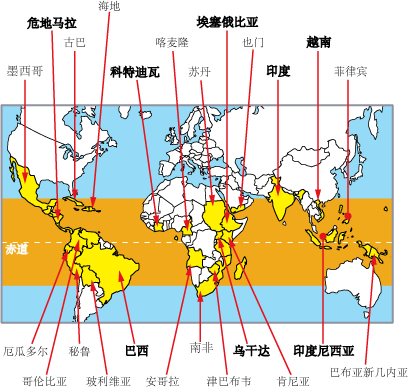
Flavor and taste characteristics of Haitian coffee in Port-au-Prince, Haiti. Blue Haitian coffee mountainous country Haiti
Haiti: Port-au-Prince coffee flavor taste characteristics: rich flavor, mild taste. Haiti, located in the western part of the island of Hispaniola in the Lobi Sea, covers an area of about 27800 square kilometers. Haiti means a mountainous country in indigenous languages. This mountainous country is also the most disaster-prone region on earth. It has been in the midst of war and poverty, and is the most material-poor country in the world.

Ecuador Coffee Flavor Characteristics Variety Producing Area Taste Treatment Method Planting Environment Introduction
In 1875, 340 years after Frei Thomas de Berlanga discovered the island, an indigenous man named Cobos arrived on San Cristobal Island, where he established the Hassenda Coffee Plantation and planted about 100 hectares of Arabic bourbon trees. Because the plantation is located between 140 meters and 275 meters above sea level, the climate is equivalent to the climate between 915 meters and 1830 meters inland.
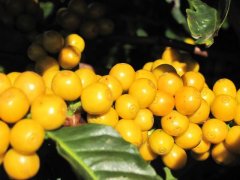
Colombia Kachalu (Cacaro Farmers' Association) Organic Coffee introduction Cup Test description
Colombia Kachalu (Cacaro Farmers' Association) Organic (EU ECO Organic Certification) Kachalu Coop (Cacaro Peasants' Association) introduced the era of great navigation at the end of the 15th century, when the Spaniards came as conquerors to what is now known as Kachalu land in northeastern Colombia, the indigenous Poymas who originally lived here, in order to protect their property and culture,

Jamaica Cliff Manor Coffee Variety Fine Coffee Bean Flavor Description
Columbus arrived in Jamaica in 1494, and Spain claimed Jamaica as its colony in 1509 and renamed it Santiago. Spain's policy of slavery towards the indigenous population led to the extinction of the Arawak people on the island as a result of war, disease and slavery. To supplement Jamaica's Jamaica labor force, Spain began selling slaves from Africa to Jamaica in 1517, resulting in
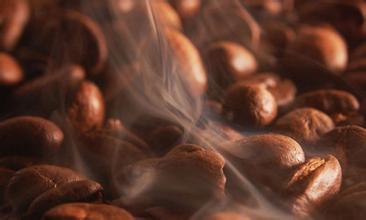
Introduction to the flavor and taste characteristics and roasting degree of Asian coffee beans in Port-au-Prince, Haiti
Flavor and taste characteristics: rich flavor, mild taste. Haiti, located in the western part of the island of Hispaniola in the Lobi Sea, covers an area of about 27800 square kilometers. Haiti means a mountainous country in indigenous languages. This mountainous country is also the most disaster-prone region on earth, it has been in the midst of war and poverty, and it is one of the most material-poor countries in the world. Even so,

Introduction to the characteristics of Flavor description and Grinding degree of Hassanda Coffee Garden in Ecuador
In 1875, 340 years after Freitoma de Belanga discovered the island, an indigenous man named Kovos came to St. Cristobal Island, where he established the Hasunda Coffee Garden and planted about 100 hectares of Arabian bourbon coffee trees. Since the plantation is located between 140m and 275m above sea level, the climate is equivalent to that of 915m ~ 1830 m in the interior.

What factors determine the content of carbohydrates in coffee
What factors determine the amount of carbohydrates in coffee? local natives often grind the fruit of the coffee tree and knead it with animal fat to make many ball balls. These indigenous tribes use these coffee balls as precious food for soldiers who are about to go out to battle. It was not until around the 11th century that people began to use boiled coffee as a drink.

Introduction to Ecuadorian Coffee Flavor and Taste Ecuador Coffee Manor in Ecuadorian Coffee producing area
In 1875, 340 years after Freitoma de Belanga discovered the island, an indigenous man named Kovos came to St. Cristobal Island, where he established the Hasunda Coffee Garden and planted about 100 hectares of Arabian bourbon coffee trees. Since the plantation is located between 140m and 275m above sea level, the climate is equivalent to that of 915m ~ 1830 m in the interior.

Study on Agricultural Ecology of Coffee in Mexico and Dignity of Organic Coffee Farmers in Mexico
Professional baristas Please follow the Coffee Workshop (Wechat official account cafe_style) in 1867, coffee rust (coffee rust) broke out in Ceylon, destroying the coffee kingdom established by the British Empire and causing the British to drink tea instead. In 1877, coffee rust also broke out in Indonesia, which changed the local habit of growing Arabica coffee and changed it to Rob.